
Scientists have recently stated they believe we share the earth with 1 to 2 million different species of animals. Here at Working Animals Retirement Network, we strive to make a difference in the lives of a small fraction of those species.

The animals we help here are considered working animals, and our main goal is to provide a peaceful transition from the working chapter of their lives to retirement. Before these animals go to pastures, sanctuaries, and forever homes, they are used for a multitude of tasks. But what are these tasks exactly? This article aims to inform you on what a working animal is, why we use them, and why we should stop.
What is a working animal?
A working animal is defined as an animal that is kept by humans and trained to perform or carry out tasks that aid individuals or society as a whole. Some are beasts of burden that provide transportation and assist with physical labor, while others are service animals trained to execute certain specialized tasks (such as law enforcement/military K-9s and mounted patrols, guide dogs, etc.)
Of course, there are also animals that work in educational, entertainment, and sporting settings, such as:
- Zoos
- Racing Venues
- Medical and Science Facilities
- Theme Parks
- Rodeos
- Circuses
- Stage Shows
Animals can not consent to being used for entertainment, labor, or service. In many cases, some animals are bred exclusively to be used by humans, as is the case for animals that are born to be turned into food or fashion accessories.
5 Types of Working Animals
There are an innumerable amount of ways that humans have used animals for their strength, beauty, or natural talents. While it would be impossible to list them all, here are some examples.
Truffle Hogs
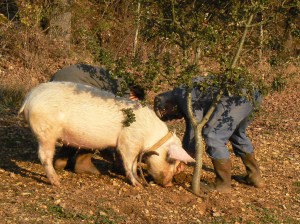
There is evidence truffle hogs have worked along humans to find truffles dating back to the time of the Romans. While dogs can be trained to do the same task, these domesticated pigs have a natural penchant for finding buried food. The downside to using truffle hogs is that their rooting around can disturb the delicate fungal structures in the soil, compromising the growth of a future crop. Doubly, the pigs want to eat the truffles themselves, and by using them as truffle hunters, we are taking away a snack they have found.
Fighting Roosters
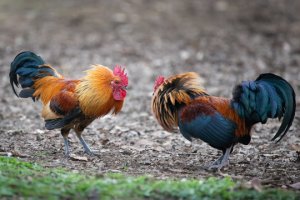
Fighting roosters that are used in cockfighting is an example of an exploited working animal. Cockfighting is banned in all 50 United States, stating that the use of roosters to fight or be injured for amusement or profit is a misdemeanor offense. The last state to ban cockfighting was Louisiana in 2007. Despite the illegality, fighting rings are still discovered and broken up well into 2022.
Mounted Ostriches
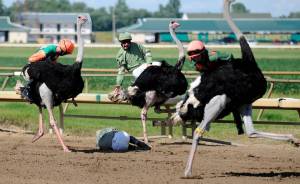
Ostriches kill about seven people a year, so while the chance is unlikely it will happen to you, it’s never zero. These majestic birds can become violent when reacting to pain, and as an animal that is not meant to be ridden, mounting one can cause them a lot of physical stress. Luckily, tourists are wising up and the practice is on the decline in the US.
Photo-Op Tiger Cubs
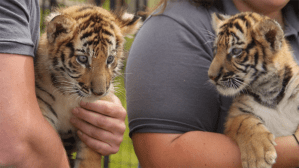
In many states, the laws for keeping big cats are vague and loosely enforced. While the industry was put in the spotlight in Netflix’s Tiger King, the practice of breeding tigers (and sometimes declawing them) so tourists can take pictures with the cubs persists. Despite the obvious issues of wild animals being separated from their natural environments for tourist enjoyment, one of the main issues is the continual breeding. Cubs only stay cubs for so long before they grow older and potentially more dangerous, so the cycle of breeding tigers to create photo opportunities continues.
Performance Snakes

Humanity’s relationship with snakes has always been a rocky one. In the advent of shock value for entertainment, many productions use snakes as props. Television shows, music videos, musical numbers, prank channels, and even reality television are all known to exploit snakes for their creepy nature. Stars, musicians, and vloggers who decide to use snakes for entertainment don’t always walk away unscathed, however. To combat this, many snakes are de-fanged or have their mouths sealed to prevent the chance of biting someone.
What happens to working animals when they can no longer be of service?
Commonly, once an animal has reached the threshold of usefulness, they are euthanized, despite possibly having many more years of life left. As an example, 10,000 thoroughbred racing horses are sent to slaughter annually.
Not all instances are as tragic, however. Service dogs that become too old to perform their training are either kept as a companion, or go to live with a trusted friend or relative.
Conclusion
When you think of working animals, you might think of service dogs, such as ones that help people with disabilities. However, here at WARN, we delineate between the two and classify animals that are being inhumanely exploited. Working animals are any animal that perform a service for humans without consent and in the presence of cruelty. Our goal is that all animals will get to live with peace and dignity, and we are honored to play a part in that.
 Working Animals Retirement Network